

How to Buy High-Quality African Print Tops Online
Quick Summary
To buy high-quality african print tops online, check the fiber content first, since most Ankara and African wax prints are 100% cotton. Then judge fabric weight and construction, measure your bust, waist, hip and length, and confirm the return terms before you order.
- Confirm the listing states 100% cotton, because the fiber content is the first thing to verify.
- Hold the fabric to a light source; a tight, consistent weave is a good sign.
- Measure bust, waist, hip and length, and compare with the listed garment measurements rather than the size label.
- Score each store on fiber disclosure, published measurements, close-up photos, construction photos and return terms.
- Wash African wax print in cool water, inside out, without bleach, and air-dry to protect the colors.
Table of Contents
- What Makes an African Print Top High Quality
- Choosing the Right Style: Blouses, Crop Tops, Peplums and Wraps
- Sizing, Fit and Inclusive Size Ranges
- Best Online Stores for African Prints and What Sets Them Apart
- How to Style African Print Tops with Jeans and for Work
- Care Instructions for African Wax Print Clothing
- Frequently Asked Questions
What Makes an African Print Top High Quality
Last Updated: November 4, 2026
Shopping for a high-quality african print tops online is harder than it looks, because most listings show the same vivid photos regardless of what is underneath. We at African Dazzle Boutique see this question constantly, and the honest answer is that quality shows up in the fabric, the construction and the fit rather than the print alone. The sections below walk through how to judge each one before you click buy.
Start with the fabric. Ankara and African wax prints are most often sold as 100% cotton, and the cotton content is the first thing to confirm in a product listing.
Checking Fabric Weight, Hand and Print Construction
Fabric weight and hand (how the cloth feels when you handle it) tell you more than the photo does. A well-made top feels substantial and drapes evenly rather than clinging or looking papery. Hold the fabric up to a light source if you can; a tight, consistent weave is a good sign, while thin, see-through patches suggest a weaker cloth.
Print construction matters too.
Why Print Alone Does Not Prove Authenticity
A vivid print does not prove a fabric is authentic or well made, and sellers can reproduce patterns cheaply. Some buying guides argue that authentic African fabric has a visible, slightly imperfect print on both sides, but that is one seller's guidance rather than an independent standard, so treat it as one clue among several. Weigh the print together with the listed fiber content, the fabric weight and the seller's specific product details.
Choosing the Right Style: Blouses, Crop Tops, Peplums and Wraps
Style choice should follow how you plan to wear the piece. Structured blouses suit office days, while breezy cuts and crop tops suit warm weather and casual outings. Peplum tops add shape at the waist and pair well with wide-leg trousers, and wrap or kimono-style pieces work as layers over plain basics.
The Criss Cross front Camisole, priced at $25.00, is a simple option that can be worn alone or layered. Browse the African Ankara Print Crop Top Palazzo Pant to see a crop top and palazzo set in one coordinated piece. For a coordinated look, the Elegant African Ankara Fabric Two-Piece Set, a smocked peplum top with wide-leg palazzo pants at $85.00, offers a complete outfit for upscale gatherings or daytime events. A flared skirt and blouse set, the Shirley Skirt & Blouse in Cotton Adire at $79.00, is another coordinated option.


Dress-length and kimono-style pieces are also available. The African Ankara Cotton Basket Kimono in long length lets you wear the print as a wrap over plain layers.

Sizing, Fit and Inclusive Size Ranges
Fit is where most online orders go wrong, so measure before you buy, and measure the way a tailor would. Use a soft tape measure over light clothing and keep the tape level, not pulled tight.
- Bust: measure around the fullest part of the bust, keeping the tape parallel to the floor.
- Waist: measure at the natural waist, the narrowest point, usually just above the navel.
- Hip: measure around the fullest part of the hips, roughly 7 to 9 inches below the natural waist.
- Length: for a top, measure from the shoulder seam straight down to the hem you want; compare that to the listed garment length rather than guessing.
A size "M" from one brand can match a size "L" from another, and printed cotton behaves differently from stretch fabrics.
Fit notes by body shape help narrow the choice before you measure:
- Pear shapes often do well with peplum and wrap tops that skim the hip and define the waist without clinging.
- Apple shapes tend to prefer wrap and kimono-style fronts that create a vertical line and avoid a tight waistband.
- Rectangle shapes can use peplum flares and off-shoulder necklines to add curve at the waist and shoulder.
- Full bust shoppers should check whether the bust measurement is listed separately and whether the bodice has darts; a smocked or elasticated back adds flexibility.
The two-piece set above is made from non-stretch cotton fabric, per its listing.
Watch out: ordering by your usual size without checking the finished measurements is the most common cause of a return, especially on structured peplum and fitted shirts where the waist has no give.
Measure these four points before you order, since finished garment measurements matter more than the size label.
| Measurement | How to measure | Note |
|---|---|---|
| Bust | Fullest part of the bust, tape parallel to the floor | Keep the tape level, not tight |
| Waist | Natural waist, the narrowest point | Usually just above the navel |
| Hip | Fullest part of the hips | Roughly 7 to 9 inches below the natural waist |
| Length | Shoulder seam to the desired hem | Compare with the listed garment length |
Best Online Stores for African Prints and What Sets Them Apart
Most top-ranking pages for this keyword are storefronts, so they rarely tell you how to judge one store against another. The useful angle is a repeatable comparison method: score each store on the same five checks before you buy, rather than trusting the word "authentic" in a listing title.
1. Fiber disclosure. A strong listing names the fiber and the percentage, such as "100% cotton," in the product details rather than only in marketing copy. A listing that says "African fabric" with no fiber content is a warning sign, because you cannot predict shrinkage, stretch or care needs from it.
2. Measurements, not just sizes. Compare whether a store publishes finished garment measurements (bust, waist, length, sleeve) alongside the size label. Finished measurements let you compare a top to a garment you already own; a size chart alone does not.
3. Print photography. Look for at least one close-up that shows the print edges and one photo of the inside of the garment.
4. Construction photos. Seams, hems and facings are where cheap tops fail first. A store confident in its construction will show a hem or inside seam; if every photo is styled to hide the stitching, assume the finishing is basic.
5. Return and exchange terms. Read the window and the condition requirements before ordering. Print tops are often final sale or subject to restocking fees, so the return policy is part of the value calculation, not an afterthought.
When comparing any store, run the same five checks and keep a simple scorecard: fiber named, measurements published, close-up and inside photos shown, construction visible, and a return window you can live with. A store that passes four or five checks is a safer bet than one with prettier photos and no details.
Watch out: a low price can hide a thin cotton that pills or fades after two washes, so compare the fiber and construction notes before you compare the number.
How to Style African Print Tops with Jeans and for Work
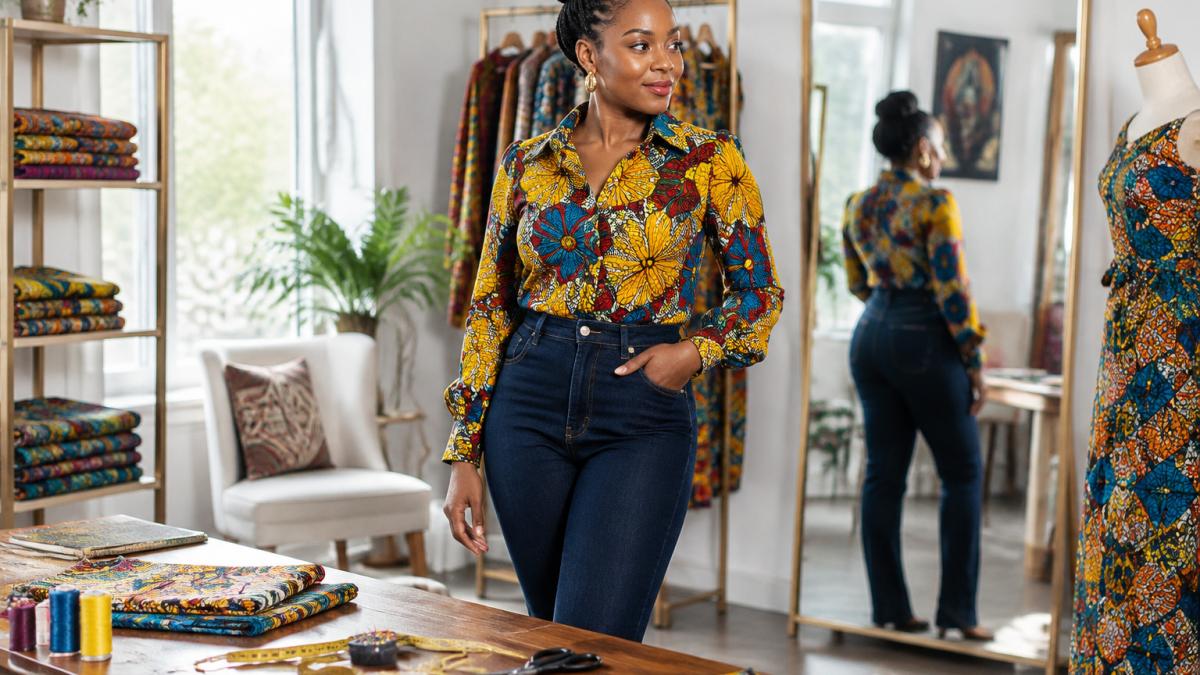
Pairing a print top with jeans is one of the easiest ways to wear it daily. A tucked-in blouse with dark, straight-leg jeans reads as polished, while a cropped top over high-waisted jeans feels relaxed. For a workplace look, choose a structured blouse in a more muted print and pair it with tailored trousers or a solid skirt, letting the print serve as the focal point. For a lightweight trouser to pair with a print top, see the African Asoke Palazzo Pants.
Care Instructions for African Wax Print Clothing
Wash African wax print and Ankara cotton in cool water, turn garments inside out to protect the surface, and avoid bleach. Air-dry flat or on a hanger where possible, since high heat can fade bright colors and stiffen cotton. If a listing includes laundering advice, such as taking a piece to the cleaners and asking for a light starch, follow that instruction for that specific item.
Store prints folded or hung away from direct sunlight to slow fading.
Frequently Asked Questions
Where can I buy authentic African print tops online?
Look for boutiques that name their fabric source, describe the construction, and list measurements for each piece. African Dazzle Boutique sells ready-to-wear African print clothing, including the Criss Cross front Camisole at $25.00, the Crop Top and Flared Skirt set at $79.00, and the Smocked Peplum Top with Wide-Leg Palazzo Pants at $85.00. Compare the fabric composition listed on each product page before you order.
How can you tell if African print fabric is high quality?
Start with the hand of the fabric. Good cotton African print usually feels substantial and holds its shape rather than feeling thin or slick. Check that the print looks even and sharp, and that the color does not look washed out or blotchy. Fabric weight, construction details like straight seams, and a clear description of the material all matter more than the print alone, since a convincing pattern can appear on lower-quality fabric.
How should I care for my African print tops to keep them vibrant?
Wash African print tops in cold water with a mild detergent, and turn them inside out to protect the surface of the print. Avoid bleach and hot dryers, and hang the top to air dry out of direct sunlight, which can fade bright colors over time. If a top is starched, ask a professional cleaner to use a light spray starch, and press it on the reverse side with a moderate iron setting.
Do African print tops come in inclusive sizing?
Many African print tops are cut in a range of sizes, but fit varies by silhouette. Structured blouses and wrap styles can fit differently from breezy or crop designs. Compare the bust, waist and length measurements on each product page with a well-fitting top you already own, and choose the size that matches your measurements rather than your usual label.
